We are deeply troubled by the recent reporting in The New York Times regarding longstanding allegations of abuse of women and girls involving César Chávez. We also honor the courage of Dolores Huerta in speaking publicly about these experiences.
César Chávez and Dolores Huerta co-led a movement that advanced the rights and dignity of farmworkers and inspired generations. That legacy remains meaningful to many in our community. At the same time, the accounts described–spanning many individuals and decades–are devastating and cannot be ignored.
We also recognize that in many movements, including our own communities, harm has at times gone unspoken or unaddressed in the interest of protecting a broader cause. That context does not diminish the experiences shared–it underscores the power, and often the cost, of coming forward.
We believe survivors and the truth of their experiences, and we take seriously what they have shared.
The experiences described, particularly by women who have carried these stories over time, reflect the courage it takes to speak truth in the face of power, silence, and stigma. These truths reflect the profound and lasting impact on the lives of those affected.
As a Latino-led organization rooted in community, Hacienda CDC is committed to upholding the dignity, safety, and humanity of all people.
We also recognize the importance of continuing to examine the histories we inherit, ensuring that the leaders we uplift reflect not only impact, but integrity. And as we do, we must be clear: the burden of shame and stigma does not belong to those who come forward–it belongs with those who cause harm.
Moments like this call on us not to look away, but to listen, reflect, and reaffirm our values. We stand with those who have come forward and with all survivors whose voices deserve recognition, dignity, and care.
If you or someone you know needs support, confidential resources are available, including Línea UNICA (24/7 support for survivors of interpersonal violence). You can also access the national RAINN hotline at 800-656-HOPE.
Nos preocupan profundamente los recientes reportajes en The New York Times sobre denuncias de larga data de abuso contra mujeres y niñas relacionadas con César Chávez. También reconocemos el valor de Dolores Huerta al hablar públicamente sobre estas experiencias.
César Chávez y Dolores Huerta co-lideraron un movimiento que promovió los derechos y la dignidad de las y los trabajadores agrícolas e inspiró a generaciones. Ese legado sigue siendo significativo para muchas personas en nuestra comunidad. Al mismo tiempo, los testimonios descritos—que abarcan a muchas personas a lo largo de décadas—son devastadores y no pueden ser ignorados.
También reconocemos que, en muchos movimientos, incluidas nuestras propias comunidades, en ocasiones el daño ha permanecido en silencio o sin abordarse con el fin de proteger una causa mayor. Ese contexto no disminuye las experiencias compartidas—más bien subraya el poder, y muchas veces el costo, de alzar la voz.
Creemos en las personas sobrevivientes y en la verdad de sus experiencias, y tomamos en serio lo que han compartido.
Los testimonios descritos, particularmente por mujeres que han cargado con estas historias a lo largo del tiempo, reflejan el valor que se requiere para decir la verdad frente al poder, el silencio y el estigma. Estas verdades reflejan el impacto profundo y duradero en la vida de las personas afectadas.
Como organización liderada por latinos y arraigada en la comunidad, Hacienda CDC está comprometida con defender la dignidad, la seguridad y la humanidad de todas las personas.
También reconocemos la importancia de seguir examinando las historias que heredamos, asegurando que las personas líderes que reconocemos reflejen no solo impacto, sino también integridad. Y al hacerlo, debemos ser claros: la carga de la vergüenza y el estigma no recae en quienes alzan la voz—recae en quienes causan daño.
Momentos como este nos llaman a no apartar la mirada, sino a escuchar, reflexionar y reafirmar nuestros valores. Estamos con quienes han hablado y con todas las personas sobrevivientes cuyas voces merecen reconocimiento, dignidad y cuidado.
Si usted o alguien que conoce necesita apoyo, hay recursos confidenciales disponibles, incluyendo Línea UNICA (apoyo 24/7 para sobrevivientes de violencia interpersonal). También puede comunicarse con la línea nacional de RAINN al 800-656-HOPE.
Hacienda’s co-founders and our CEO, Ernesto Fonseca share the rich history behind our mission and culture within the Cully Neighborhood.
by Ernesto Fonseca, Clara Padilla & Maria rojo de steffey
_______
Hacienda Community Development Corporation (Hacienda CDC) is a cornerstone of the vibrant Cully neighborhood in Portland, OR. From its founding, the visionary leadership at Hacienda has made a lasting impact on the neighborhood, helping transform it into a thriving, family-oriented community.
The Cully neighborhood was named after Thomas Cully, who settled in the area in 1847. For much of its history, it remained unincorporated, only becoming part of Portland in 1985.
For decades, Cully lacked essential infrastructure like sidewalks, lighting, and sewer systems. During the 1950s and 1960s, developers took advantage of cheap land and minimal regulation, building modest multifamily projects throughout the area. By the mid-1980s, when annexation into Portland finally came, many of these apartments had fallen into despair. Absentee landlords, focused on profits, ignored upkeep and basic occupancy standards. While this neglect created unsafe conditions, it also made the apartments affordable to low-income families, predominantly Latino, Black, and White working-class households who, despite the challenges, made Cully their home because rents were lower than elsewhere. Yet as a newly annexed neighborhood, Cully was overlooked by city planners and policymakers.
With the advocacy of Hacienda’s early board, issues of crime, neglect, and disinvestment began to draw attention and investment. Over time, this persistence became a reality. Today, Cully stands as an inspiring example of what sustained advocacy can do. Hacienda’s efforts have not only secured resources but also strengthened social bonds, empowering neighbors to support one another and shape their own future. Cully remains Oregon’s most diverse neighborhood, a rich cultural tapestry, while continuing to grapple with longstanding infrastructure challenges, including unpaved streets and missing sidewalks.
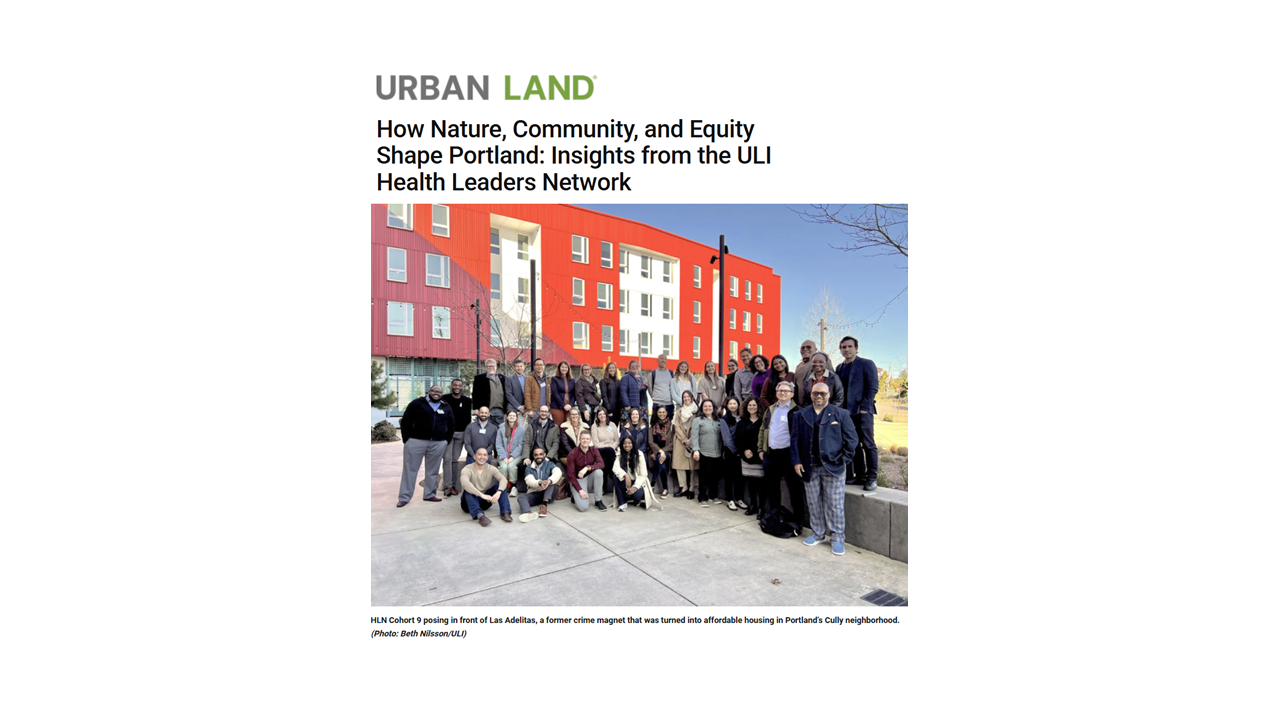
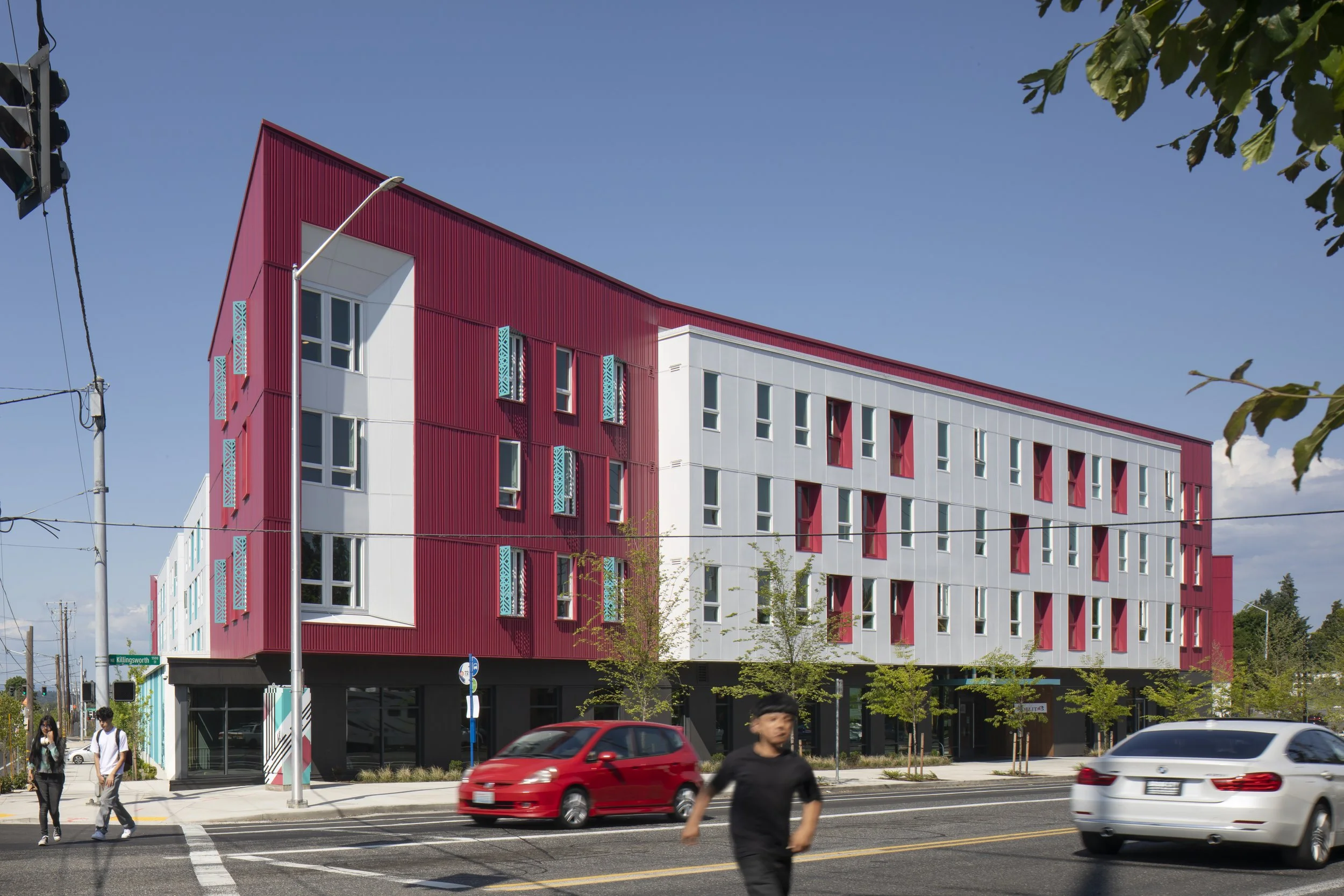
When Hacienda acquired its first properties in the early 1990s, complexes like Cully Manor and Galaxy Apartments had already become home to many Latino families. At the same time, the infamous Sugar Shack, a strip club on the corner of Cully Boulevard and Killingsworth Street. The club was allegedly a hub for illicit activity, from drug dealing to human trafficking, and became a magnet for police calls. Its presence created an atmosphere of crime and insecurity, undermining the safety of nearby families. For decades, Hacienda sought to acquire the site, finally succeeding in 2017. A few years later, in 2022, it was redeveloped into Las Adelitas.
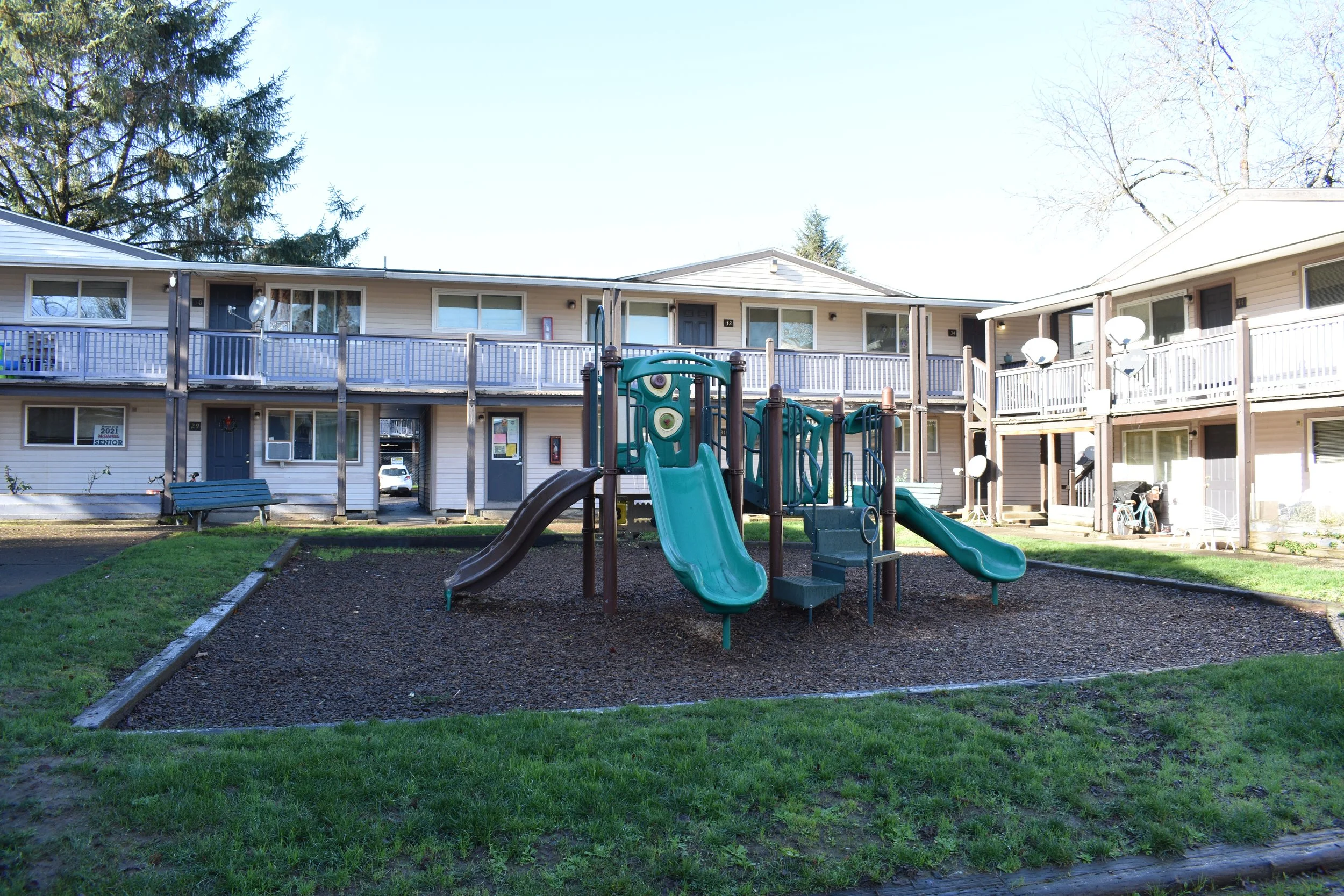
As Hacienda began advocating for change, families living in Cully Manor, Townhouse Apartments, Wendorf Apartments, and Galaxy Apartments faced unsafe conditions. Children couldn’t even play outside without fear.
Recognizing this, Clara Padilia Andrews, former New Mexico Secretary of State, a well-experienced organizer and then assistant to Multnomah County Chair Gladys McCoy, brought her deep experience in community organizing to Cully in the late 1980s. She partnered with Maria Rojo de Steffey, who would later serve as Multnomah County Commissioner, to push for city, county, and state intervention to purchase the troubled complexes. Baltazar Ortiz (Buz Ortiz) and Dan Steffey were tasked with locating the owner and slumlord of these apartments and traveled to California to negotiate the purchase of these complexes. When the apartments were finally secured, Founding Board Chair Buz Ortiz named the newly combined apartments Villa de Clara Vista in honor of Clara’s vision, work, and unwavering commitment to building a better future for Latino families.
Villa de Clara Vista
Their efforts made it clear that a new nonprofit was needed to lead this transformation; The path to forming a 501(c)(3) was long and complicated. Clara and Maria identified an exciting but dormant non-profit, the Northwest Voter Registration and Education Project, founded in 1986 by William Weisman. With Weisman’s support, the organization was renamed the Northwest Community Project in 1988, initially led by Luz Gutierrez as president, followed by Ramona Soto Rank. This name was again changed in the 1990s.
By the early 1990s, Clara’s vision of a strong, community-driven nonprofit was taking place. Alongside Maria, she again recruited Baltazar “Buz” Ortiz to help restructure the organization. On July 8th, 1992, the trio officially submitted the paperwork to establish Hacienda Community Development Corporation. Ortiz became Board Chair, with Maria serving as Vice Chair. The Founding board and its supporters included dedicated community leaders such as Baltazar, Melanie Daivs, Dan Lucero, Mary Lucero, Gilbert Rodriguez, Roslind Rodriguez, Urbano Torres, Frank Soto, Lina Garcia Seabold, Bertha Ferran, Luis Ornelas, and Rodolpho Pedraza Baldwin. At the time, no Executive Director was hired, and all the board members and administrators were unpaid.
The hundreds of families who now live in Hacienda’s communities rely on its essential services and are the direct beneficiaries of these leaders’ dedication, vision, and belief in building a stronger, safer community for all.
###
Our Bold Vision for the Next 3 Years
Estimados amigos,
At Hacienda CDC, we believe in the power of community. For over 30 years, we have helped strengthen families, stabilize housing, and create economic opportunities that foster generational wealth.
Over the last year, however, we have witnessed immigration and economic equity face growing headwinds that show no signs of abating. In fact, we believe they will intensify in the coming months.
Times like these must be met with strong leadership, a bold vision, and action.
Today, I am proud to share with you our FY25–28 Strategic Plan—a clear, intentional roadmap to meet this moment and shape the future our communities deserve.
Over the next three years, we will:
Strengthen our foundation to ensure Hacienda’s long-term sustainability.
Elevate community voices through advocacy to unlock resources and political support for our communities.
Launch innovative programs, ensuring more families have access to homeownership, small business support, and wealth-building pathways.
Expand affordable housing in new markets, deepening our partnerships and long-term impact.
This plan is not just about what we aim to achieve—it is also about how we intend to get there: with discipline, creativity, and an unwavering commitment to equity and resilience.
Thank you for continuing to stand with us as we build a future where all families can thrive.
Siempre Adelante,
Dr. Ernesto Fonseca
Chief Executive Officer
BEtter days to come: The future of the Portland Mercado looks bright
PORTLAND, Ore., May 12, 2025
Estimados amigos,
As we continue with the reconstruction of the Portland Mercado, we want to ensure you stay informed about the progress of our beloved Mercado. These recent updates reflect a shared vision of what the future of the Portland Mercado will look like.
We are deeply grateful to every business owner who brought energy, flavor, and culture to the Portland Mercado over the years. We’re cheering them on as they continue their journeys. A heartfelt thank you to Havana Station, Fernando’s Alegria, Principe Maya, Tierra del Sol, Que Bacano, XoCOTL, Tita’s Kitchen, and Barrio.
Construction began Monday, May 12th, an exciting milestone in our journey forward.
We anticipate officially reopening in Spring of 2026. We’ll continue to keep you updated as new milestones are reached.
Thanks to the generous support of Prosper Portland, the Oregon Community Foundation, Harbourton Foundation, and countless individual donors. To this date we have raised over $1,060,000 toward our rebuilding efforts. To contribute towards the Portland Mercado rebuild fund please go to haciendacdc.org/donate
A New Beginning: The reimagined Portland Mercado will feature enhanced commercial spaces, a new commissary kitchen, more community gathering areas, a lower bar and a rooftop terrace and bar while keeping our colorful food carts.
We are excited for this next chapter and grateful for your continued love and support. Muchísimas gracias for standing with us as we rebuild and reimagine the Portland Mercado.
Saludos,
Dr. Ernesto Fonseca, PhD
Chief Executive Officer
Hacienda CDC
Yonny is a self-starter and passionate business owner with a vision to bring bold flavors and elevated regional Mexican cuisine to life. Through the Empresarios program, he has transformed his dream into reality—launching a family business that shares the rich culinary traditions of Yucatán with the Portland community.
Read on to discover Yonny’s inspiring journey from Hacienda resident to proud Empresarios client.
Photo credits: Nick Mendez
Upon arriving in Portland, Oregon, Yonny and his family set out to make the most of their new life in a different country. Like many immigrants, this chapter was marked by hard work, determination, and the drive to build a better future. With a deep sense of responsibility and a desire to bring prosperity to his loved ones, Yonny began working tirelessly to support his family. His career in Oregon began in janitorial services, a role he held for several years.
Over time, Yonny realized he wanted something more. He shifted into the food industry, where he found not just a job, but a passion. Although Yonny’s new life in Portland began in the late ’90s, he never forgot his roots. A proud native of Yucatán, Mexico, he held tightly to the flavors and traditions of his homeland while adapting to life in the U.S. As a father of three, he constantly sought opportunities to grow and learn.
Over the course of more than a decade, Yonny’s persistence became one of his greatest strengths. Starting in the kitchen as a dishwasher, he quickly began asking questions, observing processes, and learning every aspect of how a kitchen operates. With each passing year, he developed a deeper understanding of the food industry and what it takes to run a successful kitchen. His entrepreneurial spirit eventually ignited a dream: to start his own food business.
That dream gave birth to Ta Bueno Ne.
“Ta Bueno Ne is a term of endearment we all heard growing up. It means ‘It’s good, friend,’ often used when talking about food in Mayan culture.” This sentiment captures the heart of Yonny’s mission—bringing comfort, culture, and connection through food.
“The Empresarios program helped me and guided me through a very difficult process. We didn’t know where to go but they knew how to support us”
“At first, we thought starting was easy. We soon realized it wasn’t, and we didn’t have any idea as to how to do it. It felt defeating and like we were doing everything wrong. Very discouraging.” Like many first-time entrepreneurs, he and his family underestimated the complexities of launching a business. The excitement quickly gave way to confusion and frustration as they encountered unexpected challenges—from permits and licensing to budgeting and logistics. But instead of giving up, Yonny looked for support.
Through the guidance of Business Advisors in the Empresarios Program, he began to understand not only the systems involved in the food industry but also the practical steps needed to create a sustainable business. With the encouragement and ongoing mentorship of Juan Vildosola, a Business Advisor, Yonny remained committed. He frequently reached out with questions, always eager to absorb new information. Over time, and with this steady support, his dream became a reality.
“Our food isn’t typical because we aim to elevate both visually and in flavors. Flavors matter but so does the plating. In Ta Bueno Ne, we really focus on all the details.” Developing new menu items was one of the first foundational goals Yonny pursued, shaping a culinary vision that reflected both his roots and his aspirations. Yonny made it his mission to present dishes that are both rooted in heritage and elevated in execution. From traditional flavors to modern presentation, every plate tells a story.
Yonny’s children have been a source of strength and motivation throughout his journey. Not only do they support him emotionally, they also actively participate in the business. His oldest daughter, now a co-owner, has fully embraced the entrepreneurial spirit. She works alongside her father, helping to manage operations and shape the future of their growing enterprise. “My kids are encouraging me to continue to do this, and they are proud that we have been able to achieve this success.” Yonny shared that his children are proud to know they can have a family business and also participate in running it.
Yonny exemplifies what’s known as the Hacienda effect—a full-circle moment experienced by many who engage with Hacienda’s programs. From being a resident in Hacienda housing to becoming a thriving small business owner, Yonny’s story highlights the potential and success that blossoms within the Hacienda community.
Yonny's journey is a powerful example of what’s possible when community, opportunity, and perseverance come together.
These business success stories are made possible thanks to our Empresarios team. Thank you for helping our entrepreneurs create sustainable businesses!